

 Language
 中文简体
中文简体 русский
 Español
 Deutsch
 عربى
عربى Contact Us
Eyeshadow


 0
0
Product
Didn't find the product you like?
We gonna help you find matched one fast
Popular Products
How Eyeshadow Palette Manufacturer Improves Color Stability For Retail
2026-05-08
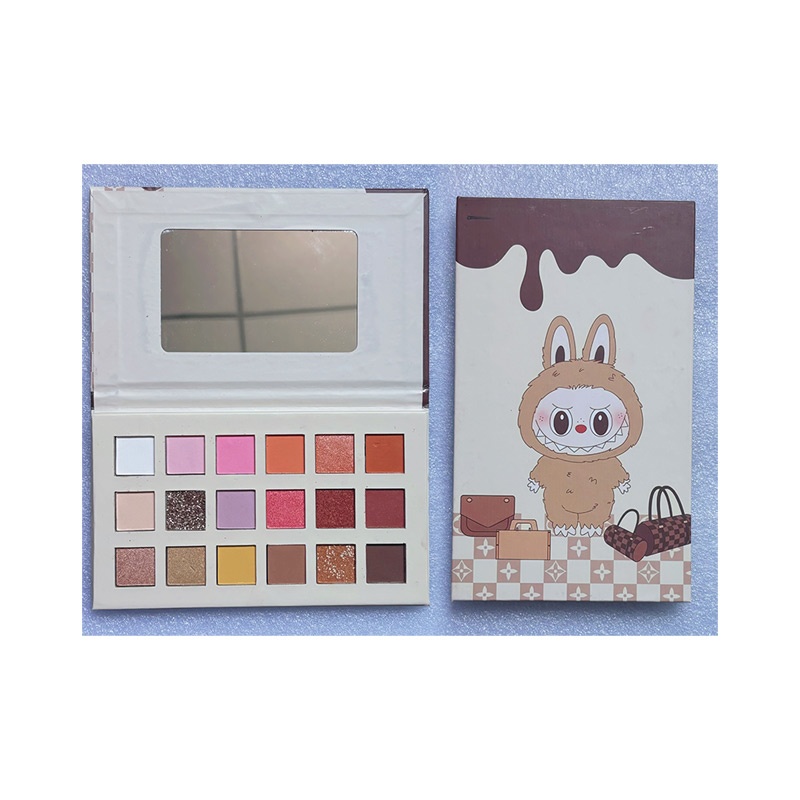
Eyeshadow Palette Manufacturer processes play an important role in how cosmetic products perform on shelves, especially when paired with evolving Basic Cosmetics For Women that demand consistent tone and wear behavior. When color variation appears between batches or even within the same production run, retail confidence can be affected, making stability a key focus in product development and supply planning.
In many modern cosmetic supply chains, maintaining consistent pigmentation and texture across different environments has become a practical concern rather than a purely aesthetic one. This is especially relevant for retail distribution, where storage conditions, transportation cycles, and shelf time all influence product appearance.
Why Color Stability Matters in Cosmetics
Color stability in eyeshadow palettes is not only about visual appearance but also about how ingredients behave over time. Basic Cosmetics For Women typically include powder-based or pressed formulations that rely on pigment binding systems to maintain consistency. When these systems are not well-balanced, small changes in humidity, temperature, or pressure during transport can result in uneven color payoff or surface inconsistencies.
For retailers, even subtle differences between display samples and stocked units can create uncertainty. Products may look different under store lighting compared to packaging visuals, which can influence purchasing behavior. Additionally, long storage cycles in warehouses or distribution centers may gradually impact pigment distribution inside the palette, especially if binding agents are not evenly integrated.
From a manufacturing perspective, variation often comes from raw material sourcing, mixing speed, pressing pressure, and pigment dispersion time. Each of these steps affects how stable the final color output remains after production. As product lines expand, maintaining uniformity across multiple batches becomes more complex, especially for palettes containing multiple shades within a single compact unit.
Production Adjustments Supporting Consistency
In recent production approaches, Eyeshadow Palette Manufacturer workflows often involve refined pigment dispersion techniques and controlled pressing systems to reduce variation between batches. Instead of focusing only on visual output during production, more attention is placed on how ingredients interact over time.
One commonly used adjustment is extended mixing cycles for pigment and base powders. This allows color particles to distribute more evenly within the base matrix, reducing the chance of visible streaking or patchiness after pressing. Another adjustment involves controlling particle size distribution, ensuring that pigments do not separate during vibration or transport.
Environmental control during production also plays a role. Stabilized humidity and temperature in mixing and pressing areas help reduce unwanted moisture absorption, which can alter powder texture. Packaging design is also considered part of the process, where sealing methods are adjusted to reduce air exposure after filling.
Some manufacturers also introduce layered pressing techniques, where pigments are compressed in controlled stages rather than a single high-pressure cycle. This helps maintain internal structure and reduces the likelihood of powder shifting during shipping or handling.
Application in Retail and Daily Cosmetic Use
In retail environments, stable eyeshadow palettes support more predictable customer experiences. Shelved products remain visually consistent even after extended display periods, which helps reduce discrepancies between tester units and packaged goods. This is particularly relevant for Basic Cosmetics For Women, where users often expect similar performance between purchase and repeated use.
For e-commerce distribution, color stability becomes even more relevant because products may pass through multiple temperature zones before reaching consumers. A stable formulation ensures that when the package is opened, the shade structure remains close to what is shown in product listings.
In daily cosmetic routines, users often layer multiple shades from a single palette. If one shade behaves inconsistently due to pigment separation, it can affect blending results. Stable palettes help maintain predictable layering behavior, which supports more flexible makeup application without requiring frequent product adjustments.
Retail testers also benefit from stable formulations. When tester palettes degrade differently from stock units, customer trust may decrease. Maintaining similar behavior between testers and packaged products helps align in-store experience with at-home use.
Observed Production Outcomes and Batch Consistency
Some production observations show that adjusting pigment dispersion time can reduce visible shade variation across batches. In controlled internal testing environments, palettes produced with extended mixing cycles showed reduced surface irregularities after simulated transport vibration.
For example, in a sample production run involving multiple neutral-tone palettes, two different mixing durations were compared. The group processed with longer dispersion time showed more uniform color distribution when tested under varying humidity conditions ranging from moderate indoor storage levels to slightly elevated moisture environments typical of shipping containers.
Another observation involved pressing pressure adjustments. When compression force was kept within a narrower range rather than fluctuating between batches, powder breakage and surface cracking were reduced during packaging stress tests. This contributed to more consistent shade presentation across identical product lines.
Related Product
- Custom Cost-Effective Multifunctional cosmetics set
- Beautifully Packaged Multifunctional Cosmetics Set
- 18 Colors Professional Makeup Eyeshadow Pallate
- All-in-One Makeup Book Palette Eyeshadow Palette
- Makeup Kit with Lip Liner And Powder
- Hydrating Cream Finish Italian Marble Sheer Lipstick
- Smudge-Resistant Rouge Hydrating Cream Lipstick
- Heart Shape Juicy Color Lip Glaze With Moisture Essence
- Transparent Hydrating Plumping Cherry Lip Glow Oil
- Hydrating Nudescreen Liquid Blush & Lip Tint
- Moisturizing Medium Coverage Dewy Foundation
- Natural Glow Finish Lightweight Hydrating Foundation


LINKS
PRODUCTS
CONTACT
-
 WhatsApp/Wechat/Phone:
+86-13423654553 -
 [email protected]
-
 No.818 Mingkai Street ,liushi Towm, dongyang City,jinhua, zhejiang, P.R.CHINA
MOBILE SITE
Copyright © Dongyang Qicai Cosmetics Co., Ltd. All Rights Reserved.

